
 Türkçe


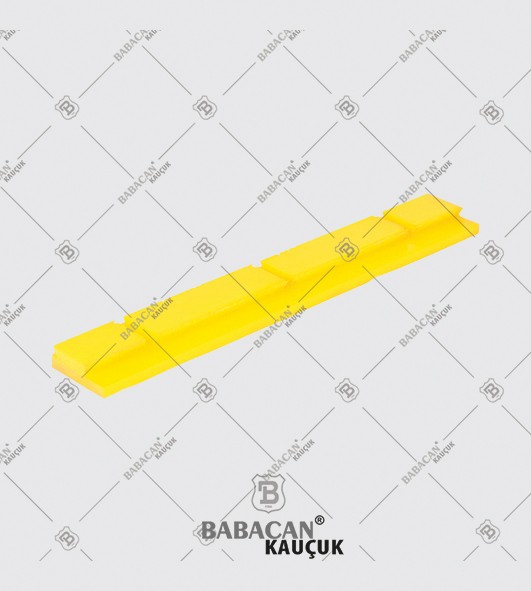
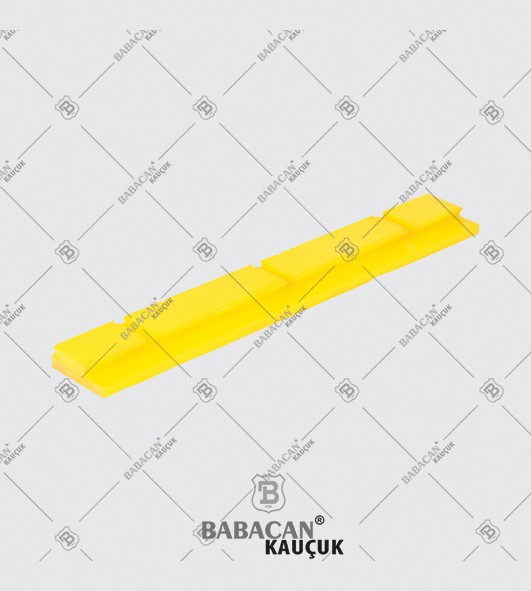
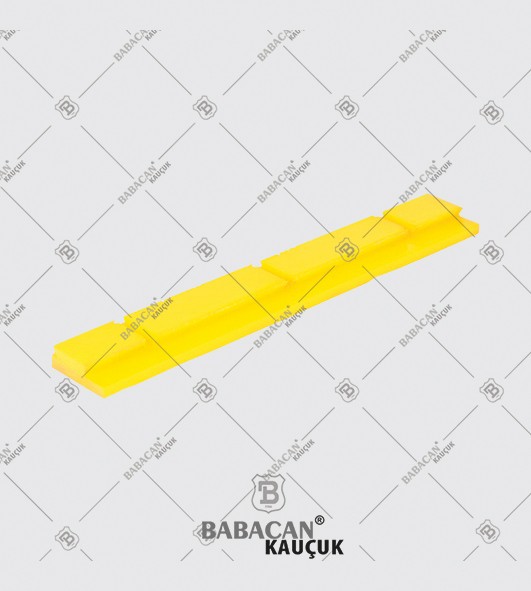

Atlas Copco 3128 3039 30 Sliding Piece
Babacan Rubber stands as a leading manufacturer in the industrial sector for rubber and polyurethane spare parts. Known for its commitment to providing comprehensive services globally and ensuring customer satisfaction at the highest level, the company shines with its use of high-quality raw materials and advanced technology. Particularly, Babacan Rubber specializes in producing various spare parts tailored for Atlas Copco drilling machines, among which the standout is the 3128 3039 30 Sliding Piece with the part number 3128303930.
The 3128 3039 30 - 3128303930 Sliding Piece is meticulously designed for use in the slides of Atlas Copco drilling machines. This spare part, specially engineered to prevent metal friction during the movement of slides, contributes to the seamless operation of the equipment. Known for its exceptional wear resistance, this slide bearing ensures long-lasting performance. This critical component not only enhances operational efficiency but also extends the lifespan of your machinery.
Key Features and Advantages:
Part Number Emphasis: Easily identify and procure the correct spare part with the distinctive part number 3128303930 and 3128 3039 30 Sliding Piece .
Material Excellence: Crafted with high-quality materials, this slide bearing guarantees durability and reliable performance.
Application Specifics: Tailored for use in Atlas Copco drilling machines, ensuring precise compatibility.
Wear Resistance: Boasting extremely high wear resistance, it ensures prolonged and efficient functionality.
At Babacan Rubber, our commitment to customer satisfaction remains at the forefront. With the 3128 3039 30 - 3128303930 Sliding Piece, we continue to uphold our pioneering position in the industry. For your needs or further information, feel free to reach out to us anytime. Elevate your machinery's performance with Babacan Rubber!
Application & technical notes
Friction costs money. Every watt of energy lost to friction between moving parts represents fuel consumed without productive work performed. In rock drilling operations where equipment runs continuously for thousands of hours annually, minimizing friction translates directly into reduced operating costs and improved productivity. The 3128 3039 30 sliding piece addresses this challenge through advanced material engineering that fundamentally reduces resistance in sliding mechanisms.
By establishing a low-friction interface, this precision-engineered component significantly lowers heat generation, thereby preventing thermal stress on adjacent hardware. Consequently, incorporating the 3128 3039 30 sliding piece into your routine maintenance cycles directly optimizes fuel efficiency and extends the continuous operational lifespan of your drilling rigs.
Friction's Hidden Costs in Drilling Operations
Traditional sliding mechanisms in drilling equipment rely on lubrication to reduce friction between metal surfaces. This approach creates ongoing maintenance requirements—lubricants must be replenished regularly, seals wear and allow contamination, and dust combines with grease to form abrasive compounds that accelerate wear rather than preventing it. In contrast, the advanced formulation of the 3128 3039 30 sliding piece eliminates the reliance on traditional heavy greases, mitigating the risk of abrasive particle buildup. This self-sustaining, clean operation directly prevents catastrophic surface scoring and drastically extends intervals between routine maintenance overhauls.
The economic impact extends beyond lubricant costs. Maintenance labor, equipment downtime during lubrication intervals, and accelerated wear of adjacent components all stem from friction in sliding interfaces. Underground operations face additional challenges when lubricants attract dust that transforms smooth surfaces into grinding compounds, creating a self-perpetuating cycle of wear. By utilizing the self-lubricating properties of the 3128 3039 30 sliding piece, operators can break this destructive cycle, ensuring cleaner interfaces that repel contamination. This shift in material technology delivers a durable, maintenance-free solution that significantly lowers total cost of ownership by maximizing equipment availability and reducing dependency on manual lubrication protocols.
Material Innovation for Friction Reduction
The 3128 3039 30 sliding piece represents a fundamentally different approach to managing friction. Instead of adding lubricants to reduce friction between incompatible materials, this component utilizes specially engineered polymers that inherently exhibit low friction characteristics. The molecular structure of these materials creates natural lubricity at the surface level—a property that requires no maintenance and degrades very slowly over time.
This isn't simply substituting plastic for metal. The polymer formulation balances multiple performance requirements that often conflict. Low friction demands smooth, slippery surfaces. Wear resistance requires hard, durable materials. Load-bearing capacity necessitates structural rigidity. Temperature stability across the operational range adds further constraints. Achieving all these properties simultaneously requires sophisticated polymer chemistry and careful processing control during manufacturing.
Precision Engineering and Tolerances
Low-friction materials deliver their benefits only when manufactured to exacting dimensional specifications. Excessive clearance allows movement that generates impact loads and accelerates wear. Insufficient clearance creates binding that increases friction despite material properties. The 3128 3039 30 sliding piece maintains tolerances measured in hundredths of millimeters—precision that ensures optimal performance throughout its service life.
- ✓ Dimensional accuracy within ±0.05mm across critical surfaces
- ✓ Surface finish optimized for minimum friction coefficient
- ✓ Consistent material properties throughout component volume
- ✓ Geometry designed for even load distribution
Thermal Stability Under Operating Conditions
Drilling equipment experiences substantial temperature variations. Cold startup conditions in underground mines can see temperatures near freezing. Continuous operation generates heat that raises component temperatures significantly. Materials that function well at room temperature may become brittle when cold or soft when hot—neither condition acceptable for critical sliding components.
The polymer formulation in the 3128 3039 30 sliding piece maintains consistent mechanical properties across a temperature range from -30°C to +90°C. This stability ensures that the component performs identically whether starting cold or operating continuously under load. Dimensional changes remain minimal across this temperature span, preventing binding when hot or excessive clearance when cold.
Load Distribution Mechanisms
Drilling subjects components to variable loading patterns. Thrust forces vary as rock hardness changes. Impact loads pulse through the system during percussion drilling. Lateral forces develop when drilling angled holes or encountering geological discontinuities. Each load type creates unique stress patterns within sliding components.
Polymer materials respond to loading differently than metals. Rather than concentrating stress at contact points, the material's elastic properties allow microscopic deformation that spreads loads across broader contact areas. This behavior reduces peak contact pressures, minimizing wear while simultaneously decreasing friction. The effect becomes particularly beneficial under high loads where metal surfaces would generate substantial friction even with lubrication.
Vibration Attenuation Properties
Percussion drilling generates intense vibration that radiates throughout the machine structure. Metal components transmit these vibrations efficiently, contributing to operator discomfort, accelerated wear of sensitive parts, and potential structural failures. Polymers possess inherent damping characteristics that metals cannot match, converting vibration energy into harmless heat through internal molecular friction.
When incorporated into sliding mechanisms, the 3128 3039 30 component acts as a distributed vibration damper. Rather than allowing vibration to propagate freely through the assembly, the material absorbs significant energy at the sliding interface. This damping effect protects downstream components while simultaneously reducing the fatigue loading that limits component service life.
Contamination Resistance
Drilling operations generate substantial quantities of rock dust, drilling fluid residue, and other contaminants that inevitably find their way into mechanical assemblies. Lubricated metal sliding systems suffer severely when contamination occurs—abrasive particles combine with grease to form grinding compounds that accelerate wear exponentially.
Self-lubricating polymer components eliminate the grease that attracts and retains contaminants. Dust particles that contact the sliding surface find little to adhere to, typically falling away or being expelled during normal operation. When particles do embed in the polymer surface, they sink into the material rather than acting as three-body abrasives. This behavior dramatically extends service life in contaminated environments compared to lubricated alternatives.
Service Life and Economic Impact
Component cost represents only a fraction of total ownership expense. Installation labor, machine downtime, and consequential damage from failed parts often exceed the replacement part price by factors of ten or more. Extending service intervals delivers compounding economic benefits—fewer parts purchases, reduced labor costs, improved equipment availability, and decreased risk of expensive secondary failures.
- ✓ Service life typically 2-3 times longer than metal components
- ✓ Eliminates scheduled lubrication requirements
- ✓ Reduces wear on mating components by 40-50%
- ✓ Compatible with existing Atlas Copco drilling assemblies
Installation Considerations
Transitioning from metal to polymer sliding components requires attention to installation procedures that differ slightly from traditional parts. Polymers expand and contract more than metals with temperature changes, requiring specific clearance specifications. Assembly sequences may differ to prevent stress concentration during installation. Following manufacturer guidelines ensures optimal performance and full service life.
Technicians should verify that mating surfaces are clean, smooth, and free from damage before installing the sliding piece. Sharp edges or burrs that might be tolerable with metal components can damage polymer materials during assembly. Taking time during installation to ensure proper conditions pays dividends through extended component life and reliable operation.
Application Versatility
While designed specifically for Atlas Copco drilling machinery, the 3128 3039 30 sliding piece finds application across various drilling scenarios. Underground hard rock mining benefits from reduced friction and eliminated lubrication. Tunneling operations value the precision and vibration damping. Surface drilling appreciates the wide temperature range capability. Each application realizes improvements in efficiency, reliability, and maintenance requirements.
Product Specifications
View complete technical data and ordering information: 3128 3039 30 Sliding Piece Details
Closing Perspective
Material science advances continually push boundaries of what's possible in mechanical component design. The 3128 3039 30 sliding piece exemplifies how thoughtful application of polymer technology creates measurable operational improvements. Reduced friction lowers energy consumption. Eliminated lubrication decreases maintenance requirements. Extended service life reduces total ownership costs. For drilling operations focused on maximizing productivity while minimizing downtime, these advantages translate directly into competitive advantage and improved profitability.
Frequently Asked Questions
Is Babacan Rubber a direct replacement for Atlas Copco 3128 3039 30?
Babacan Rubber part IGM.03422 is an aftermarket replacement manufactured for OEM number Atlas Copco 3128 3039 30 (Sliding Piece). OEM brand names and part numbers are used for reference only; send us your machine model to confirm fitment.
Do you ship 3128 3039 30 to the USA?
Yes. Babacan Rubber ships worldwide, including the USA. Request a quote with the OEM number and quantity.
All manufacturer names, symbols, descriptions and part numbers are used for reference purposes only and do not imply that any part is the product of that manufacturer.